This word is in my Czech learning diary for 3.2.1992. It's not a word I really need at the moment, but I seem to remember that there are certain things about it which I've forgotten :-)
My first question is
what things plout? The Word Sketch produced by the CZES corpus tells us:
vessels on water: loď, trajekt, parník, člun
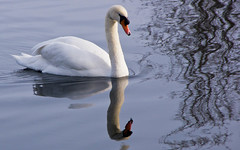
creature on water: labuť
in the sky: balon, mrak, měsíc
vessel in water: ponorka
creature in water: ryba
The first three categories may well
float and
sail - I don't have time to look them up in an English corpus at the moment, but native speaker intuition tells me this is the case. But things
in water do not float or sail, so
plout has different fields of reference - an obvious error trap. Vessels
on water more typically
come and
go in English. And creatures
on water typically
glide.
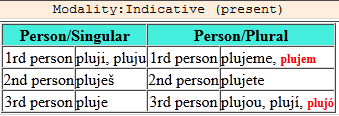
A formal matter concerns its conjugation and aspect.
As a verb of motion, I would not expect to form its future with
budu, and there are only seven examples in CZES. And I can't remember now how the future is formed. More study required.
The significant
prepositions that follow it can be seen in this extract from the Word Sketch. Because
plout is a verb of motion, the prepositions which can take more than one case (
na, pod, nad, mezi) could be expected to take accusative. But this is not the case (no pun intended). The prepositions expressing where
plout takes place, quite logically, take locative. For example,
plout na:
Pes s námi pluje na člunu (interesting 3rd pers sing, not 1st pers pl.)
Vladimir Putin pluje na vlně popularity (metaphorical use of wave)
 Mostecký kostel pluje na vodě
zbytek rostliny plul na hladině.
Nakonec všichni plujeme na jedné lodi.
Balon plul na západ
Mostecký kostel pluje na vodě
zbytek rostliny plul na hladině.
Nakonec všichni plujeme na jedné lodi.
Balon plul na západ (rare example of accusative.)
Even though there is no case alternation with
po, it's significance is worth noting. Some examples:
Měsíc pluje po hladině rybníka.
Bez pití a jídla pluli po Indickém oceánu čtyři indonéští rybáři
Adéla Stodolová se svým bříškem pyšně pluje po jevišti,
Docela v předu pluje po jezeře loďka.
Plout po moři je snem mnoha Čechů,
a měsíc, jak skvostně pluje po obloze.
If, dear readers, you have any comments, please post them here. Click "Links to this post" or the envelope icon.
 As promised, here is the list of prefixed plout verbs. They are listed here in order of frequency, obviously. There are more, but the line had to be drawn somewhere and with fewer than ten hits ...